A. God appeared to Abraham and spoke to him (Genesis 12:1-4,6-7; 15; 17; 18; 22; etc.)
B. Our faith must be based on God’s revelation (2 Timothy 3:16-17; Romans 10:17; John 20:30-31)
II. Abraham’s faith resulted in obedience
A. He knew there was something greater waiting for him (Hebrews 11:8-10: Acts 7:4-5; Matthew 8:11)
B. Abraham would not withhold anything from the Almighty (Hebrews 11:17-19)
C. Our faith is known through obedience (Romans 1:8; 16:19; James 2:20-24)
D. Our faith should be sacrificial (2 Corinthians 9:6-7; 8:1-5,10-12)
III. Abraham’s faith continued to grow throughout his life
A. Abraham was not perfect (Romans 3:23; Genesis 12:10-13; 20:1-2; 15:1-3; 17:15-19) but he grew (Hebrews 11:17-19)
B. We must also grow… like the apostles (Matthew 8:26; Acts 4:13) and like the early church (2 Thessalonians 1:3)
A. Warnings against false doctrine (1 Timothy 1:3-4; 4:1-2; Titus 3:9)
B. Preach the Word (2 Timothy 4:2; Titus 2:1)
C. We can only learn about Jesus through the Word (2 Timothy 3:15; James 1:21)
II. Four types of soil
A. The wayside (Luke 8:5, 12; cf. Romans 10:17)
B. The rock (Luke 8:6, 13; cf. Mark4:17; Matthew 16:24-26; 2 Timothy 3:12; Mark 10:29-30)
C. The thorns (Luke 8:7, 14; cf. Matthew 28:19-20; 2 Timothy 4:10)
D. The good ground (Luke 8:8, 15)
III. The sower’s responsibility: “Sow as you go, wherever you go!”
A. “As you are going, make disciples” (Matthew 28:19-20)
B. Every child of God is expected to be a sower (Luke 8:15)
I. Something less than or different from the truth
A. Idolatry in the Old Testament (Exodus 20:3-6; 32; Judges 2:7-13, 16-19; 1 Kings 11:4-8; 12:25-33; 14:23)
B. Idolatry in the New Testament (1 Corinthians 10:14; Galatians 5:19-21; Colossians 3:5; 1 Peter 4:3)
C. 21st century counterfeits (Galatians 1:6-7)
II. Counterfeit teachers
A. Jesus’ warning (Matthew 7:15-23)
B. Warnings from Peter and Paul (2 Peter 2:1-3; Acts 20:29-30)
III. How do we guard against counterfeits?
A. Individual responsibility (2 Timothy 2:15; Philippians 2:12)
B. Congregational responsibility (Revelation 2:2, 6, 14-16; Titus 1:10-11)
C. Counterfeits have always been and will always be unacceptable (1 Thessalonians 5:21; 1 John 4:1)
A. Simon’s attitude toward the Lord (Matthew 16:14; Luke 7:39)
B. Simon’s attitude toward the woman (Luke 7:39, 47)
C. The woman’s need (Luke 7:38; 18:13)
II. The parable
A. Despite their inability to pay, both were forgiven (Luke 7:41-43)
B. God’s love for us (1 John 4:19; John 3:16)
C. Our love for God (John 14:15)
III. When God forgives, He forgives completely and eternally
A. Gone, never to be remembered (Luke 7:48; Psalm 103:11-12; Psalm 32:1)
B. No matter how big your sin is (Acts 2:36-41)
C. Contrast Simon’s unrecognized sin (1 John 1:8-10) and the woman’s “many” sins (Luke 7:39, 47)
A. Exuberance due to His forgiveness (Romans 4:5-8)
B. Transgression, sin, iniquity, and deceit
C. Forgiveness is available to the penitent (2 Samul 12:13)
II. The effects of unconfessed sin (Psalm 32:3-5)
A. Suffering is not always caused by sin, but sin always causes suffering
B. Accepting personal responsibility for sin (2 Samuel 12:13)
C. When God forgives, He forgives completely and eternally
III. Encouragement to pray while opportunity exists (Psalm 32:6-7)
A. The godly (1 John 1:5-10)
B. The danger of procrastination
C. God protects, shields, and delivers the penitent
IV. The guidance of God (Psalm 32:8-9)
A. How do we receive instruction from the Lord? (2 Timothy 3:16-17; Psalm 1:2; 119:72,104-105)
B. Warning: don’t be stubborn as a mule!
V. A call to worship with joy (Psalm 32:10-11)
A. Tremendous mercy is available in God
B. A deep appreciation for what God has done (Romans 5:6-11)
A. “Love your enemies, do good to those who hate you” (Luke 6:27; Matthew 5:16)
B. “Bless those that curse you” (Luke 6:28a)
C. “Pray for those who spitefully use you” (Luke 6:28b; 1 Timothy 2:1-4)
II. The principle applied
A. “Offer your other [cheek] also” (Luke 6:29a; Romans 12:17-21)
B. “Give to everyone who asks of you” (Luke 6:29b-30)
C. The Golden Rule: “And just as you want men to do to you, you also do to them likewise” (Luke 6:31; Matthew 7:12)
III. “What credit is that to you?”
A. Step outside your comfort zone (Luke 6:32-34; Proverbs 25:21-22)
B. “Your reward will be great” (Luke 6:35; James 4:10)
C. “Therefore be merciful, just as your Father also is merciful” – show compassion toward those who mistreat you, as they do not yet know the love of God (Luke 6:36; Romans 5:6-11)
A. We must please God (Psalm 147:11; Hebrews 13:15-16; Romans 12:1-2)
B. This will upset some people (Galatians 1:10)
II. Give up the fear of change
A. Paul’s attitude toward change (1 Corinthians 9:19-23)
B. The early church’s response to change (Acts 8)
III. Don’t live in the past
A. Have you been forgiven? (Philippians 3:13-14; 1 Corinthians 6:9-11; 1 John 2:1-2; 1 Peter 2:1-3)
B. Forgive others (Matthew 6:14-15)
IV. Stop over-thinking and worrying
A. Seek God’s kingdom and God’s righteousness (Matthew 6:25-34)
B. Turn to Him when you struggle (Philippians 4:6-7)
V. Don’t doubt yourself and put yourself down
A. You are: chosen, royal, and holy! (1 Peter 2:9)
B. He has given us power, love, and a sound mind! (2 Timothy 1:7; Romans 1:16-17; Romans 5:8; 1 John 4:7; Ephesians 3:4; 2 Peter 1:3)
A. “Poor in spirit” = contrition and humility (Luke 6:20; Matthew 5:3)
B. “Rich” trust in wealth and self (Luke 6:24; Matthew 6:19-21; Mark 10:23-25; 1 Timothy 6:9-10; Luke 18:9-14; Revelation 3:17-18)
II. The hungry and the full
A. “Hunger…for righteousness” (Luke 6:21a; Matthew 5:6)
B. “The full,” in thinking he knows it all, shows how little he knows
III. The weeping and laughing
A. Godly sorrow produces repentance (Luke 6:21b; 2 Cor. 7:8-11)
B. Don’t “laugh it off” (Luke 6:25b; James 4:9; Philippians 4:4; Romans 12:12; 1 Corinthians 13:6; James 1:2)
IV. The persecuted and the praised
A. Threats from the religious (Luke 6:22-23; Acts 4:18-21; 2 Timothy 3:12; 1 Peter 3:13-17)
B. The approval of men (Luke 6:26; 2 Timothy 4:3-4)
A. “There is, beyond the azure blue, a God concealed from human sight” (Genesis 1:1; Romans 1:20)
B. “He tinted skies with heav’nly hue and framed the worlds with His great might” (Genesis 1:1; Hebrews 11:3)
II. Specific revelation
A. “There was, a long, long time ago, a God whose voice the prophets heard” (2 Peter 1:16-21)
B. “He is the God that we should know” (John 17:3; 2 Peter 3:9; John 14:6)
C. “Who speaks from His inspired word” (Romans 10:17; 2 Tim. 3:16-17)
III. The creation of man
A. “Secure is life from mortal mind; God holds the germ within His hand” (Genesis 2:7; 1:26-28)
B. “Though men may search they cannot find, for God alone does understand” (Job 38:4-7; Deuteronomy 29:29)
IV. The sacrifice of the Son
A. “Our God, whose Son upon a tree, a life was willing there to give” (Ephesians 2:14-16)
B. “That He from sin might set man free, and evermore with Him could live” (Romans 6:16-18; Ephesians 3:10-11; Matthew 25:34)
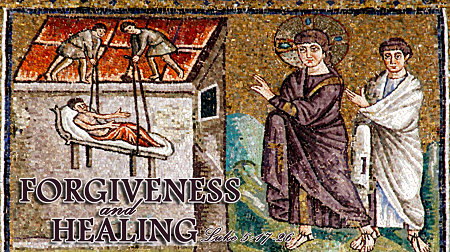
I. The influence of faithful friends (Luke 5:18-19)
A. They refused to give up (Luke 8:14)
B. “Tell me who your friends are and I will tell you who you are” (1 Corinthians 15:33)
II. The immensity of Jesus’ power (Luke 5:20-25)
A. The judgment of the scribes and Pharisees (Acts 26:5; Matthew 23; 5:20; Deuteronomy 18:18-22; Mark 14:64)
B. Jesus demonstrated His power to forgive and heal (John 3:17)
III. The importance of a proper response to Jesus (Luke 5:25-26)
A. They were amazed (Luke 2:47; 4:36)
B. They glorified God (Luke 5:25)
C. They were filled with fear (Luke 5:8)
D. “We have seen strange things today!”
But when they believed Philip as he preached the things concerning the kingdom of God and the name of Jesus Christ, both men and women were baptized. (Acts 8:12)





 ConcerningJesus.com