A. Daniel 2:31-44
B. Isaiah 2:2-3 (cf. Ephesians 2:19-22; 1 Timothy 3:15)
C. Joel 2:28-32
II. THE ESTABLISHMENT OF THE KINGDOM
A. Acts 2:1-21 (cf. Acts 11:15)
B. When they asked the question, the apostles didn’t fully understand the nature of the kingdom (John 16:12-13; 18:36; 1 Samuel 8:1-7)
III. MANY STILL MISUNDERSTAND TODAY: THE FALSE DOCTRINE OF PREMILLENNIALISM
A. Recommended reading: God’s Prophetic Word by Foy E. Wallace Jr.
B. Premillennialism “means that the second coming of the Lord will occur before the millennium begins…upon his return Christ will inaugurate the earthly kingdom referred to as the millennial reign” (Wallace 346)
C. Consequences of premillennialism
1. Makes God false to His promises (Mark 1:14-15; Deuteronomy 18:18, 22)
2. Alternates Judaism and Christianity (Hebrews 8:13)
3. Demotes Christ from His place at the right hand of God in heaven to the earth (Hebrews 1:3; 8:1)
A. Peter’s distraction in this context (John 18:15-18,25-27; 21:21-22)
B. The distractions in the parable of the sower (Luke 8:5-15)
C. Peter’s earlier distractions
1. When Jesus walked on water (Matthew 14:26-30)
2. At the Transfiguration (Matthew 17:1-7)
II. OUR FOCUS MUST BE ON FOLLOWING THE LORD
A. God must be first (Matthew 6:33; Colossians 3:1-2,5; Matthew 6:19-21; Hebrews 11:6)
B. Barclay: “Let a man serve Christ where Christ has set him” (John 21:15-22; Ephesians 4:11; 1 Corinthians 12:12-22)
C. Where is your focus? (Philippians 2:12; 1 Corinthians 9:27; Matthew 7:3-5; Galatians 6:1; Romans 12:1-2)
A. The Jews sought to stone and seize Him (John 10:22-39)
B. “Let us go to Judea again” (John 11:7)
C. Do we take the Father’s commands as seriously as the Messiah did? (John 11:9-10; James 4:13-17)
II. IS THERE ANY EXCUSE TO DISOBEY GOD OR AVOID HIS WILL?
A. The apostles feared for their lives and for the life of their Master, but that was no excuse (Mark 8:34-37; John 11:16)
B. Do we look for a way of escape from obedience?
1. “I don’t feel the need to do that” (Proverbs 14:12; 16:25; Jeremiah 10:23; Acts 23:1; 1 Timothy 1:12-13)
2. “I’ve done too many bad things” (1 Timothy 1:12-13; 1 Corinthians 6:9-11)
3. “God just wants me to be happy, no matter what!” (Matthew 5:3-10; Romans 12:1-2)
4. “I’m not ready for that level of commitment; I’ll worry about it later” (Acts 24:23-25)
5. “I’m a good person and I love Jesus, but I don’t need organized religion”
a. Romans 3:23
b. John 14:15
c. Acts 20:28; Colossians 1:24; Ephesians 5:23; Ephesians 4:4; Acts 2:47
A. “Up to seven times?” (Matthew 18:21; Amos 1:3,6,9,11,13; Job 33:29-30)
B. Context (Matthew 18:15-17)
C. The spirit of forgiveness is rooted in love (1 Corinthians 13:5)
1. Love “thinks no evil” (NKJV)
2. Love “does not take into account a wrong suffered” (NASB)
3. Love “keeps no records of wrongs” (NIV)
II. GOD’S ENORMOUS GRACE
A. The first part of the parable (Matthew 18:23-27)
B. The compassion and grace that God offers (Psalm 103:8-13; Exodus 34:6-7; Ephesians 1:7-8; Colossians 1:13-14)
III. OUR RESPONSIBILITY TOWARD EACH OTHER
A. Keep forgiving as long as you have something to forgive (Matthew 18:22)
B. God’s forgiveness is conditional (Matthew 18:28-35; Matthew 6:14-15)
C. Imitate the Lord (Colossians 3:12-13)
A. Corrupted Judaism (Matthew 15:8-9)
B. Corrupted Christianity (1 Corinthians 1:10; John 17:20-21)
C. Man-made religion (Buddhism, Islam, Scientology, Atheism)
II. ONLY JESUS HAS THE WORDS OF ETERNAL LIFE
A. Perversions of the gospel are not another gospel (Galatians 1:6-8)
B. Affirmed by Jesus (John 12:48; Matthew 7:24-27)
C. The example of Peter and John (Acts 4:8-20)
III. JESUS IS THE CHRIST, THE SON OF THE LIVING GOD
A. We must not ignore His revealed will in favor of our own desires
B. Living in such a way that shows your faith (James 2:14-24)
C. Obedience is prompted by faith (Hebrews 11)
A. Literal storms
B. Figurative storms (2 Corinthians 11:24-28)
C. God DOES care!
1. Children of God are not exempt from suffering (Matthew 5:45; John 16:33; 1 Peter 4:12-13; 2 Timothy 3:10-12)
2. These afflictions serve to strengthen us (Romans 5:1-4)
II. JESUS’ QUESTIONS TO THE DISCIPLES (MARK 4:40)
A. “Why are you so fearful?” (Philippians 4:6-7; 2 Timothy 1:7; Matthew 10:28)
B. “How is it that you have no faith?” (2 Peter 1:5-11; Romans 10:17; Matthew 7:24-27; Psalm 46)
III. THE DISCIPLES’ QUESTION TO EACH OTHER (MARK 4:41)
A. He is the Creator of all (Psalm 33:6-9; Colossians 1:15-16)
B. He is the Master of all (Colossians 1:17; Matthew 28:18)
C. He is our sympathetic High Priest (Hebrews 4:15)
A. What Jesus taught (Matthew 16:16-19)
B. The disciples’ misunderstanding (Matthew 20:20-23)
C. The church is the kingdom (Mark 9:1; Acts 2; Colossians 1:13)
II. THE IMPORTANCE OF SERVICE, NOT POSITION
A. “If anyone desires to be first, he shall be last of all and servant of all” (Mark 9:35; Matthew 20:25-28; 1 Peter 5:1-3)
B. Warnings against a power-hungry attitude (Romans 12:16 vs. Colossians 3:1-2; 3 John 9-11)
C. Positive example of service (Philippians 2:5-8; John1 3:4-5,12-16)
III. BE CONVERTED AND BECOME AS LITTLE CHILDREN (MATTHEW 18:3)
A. Innocence (Matthew 5:8; 1 Timothy 4:12; 5:22)
B. Trustfulness (2 Corinthians 1:9-10; Colossians 1:11-14)
C. Lack of prejudice (Acts 10:34-35)
D. Teachableness (2 Peter 3:18)
A. The Jews refused to believe (John 6:41-42)
B. We can partake of the bread of life because of His sacrifice on the cross (John 6:48-51; Philippians 2:5-8)
C. The literal interpretation (John 6:52)
D. Complete commitment: 24/7/365 (John 6:53-58)
II. THE DISCIPLES ASK A DANGEROUS QUESTION
A. “This is a hard saying; who can understand it?” (John 6:60)
1. “Who can hear it?” (KJV)
2. “Who can listen to it?” (ESV)
3. “Who can accept it?” (NIV)
B. A discouraging question – what’s the point in even trying? (Ezekiel 33:8-9; Galatians 6:1-10; James 5:19-20)
III. THE WORDS OF JESUS CAN SAVE
A. Our responsibility to evangelize (John 6:63; Matthew 28:19-20; 2 Timothy 2:2)
B. It is not our ability, but God’s power (Romans 1:16; 1 Corinthians 3:7)
C. Consider what the Word does
1. “Build you up and give you an inheritance” (Acts 20:32)
2. We are “born again…through the word of God” (1 Peter 1:22-23)
3. “Able to save your souls” (James 1:21)
D. Is anyone too corrupt to be saved? (1 Corinthians 6:9-11)
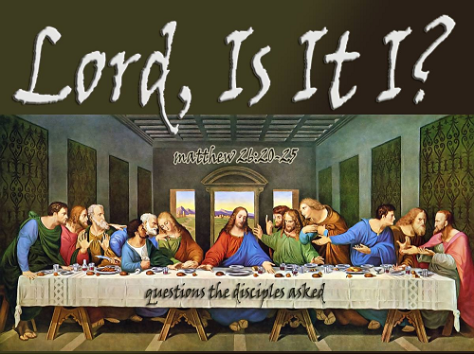
A. Jesus’ startling revelation (Matthew 26:21)
B. The fulfillment of prophecy (Psalm 41:9; cf. John 13:18)
II. THE REACTION OF THE DISCIPLES
A. The innocent eleven were “exceedingly sorrowful” (Matthew 26:22; cf. John 13:22; Luke 22:23)
1. Humble self-examination (Matthew 26:22; Mark 14:19)
2. Reaction to “this night” (Matthew 26:31, 33, 35)
B. Judas was neither innocent nor humble (Matthew 26:14-16, 25)
III. APPLICATION FOR TODAY
A. The duty of elders (Acts 20:28-30; Titus 1:10-11)
B. The preaching of sound doctrine (2 Timothy 2:3-4)
C. The obligation of the entire church (Matthew 28:19-20)
A. The Feast of the Tabernacles (Luke 9:51-52)
B. The refusal of the Samaritans (Luke 9:52-53; contrasted with John 4:39-41)
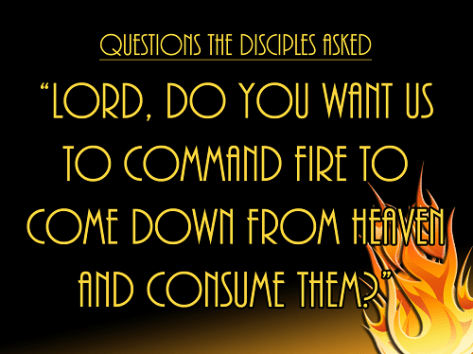
II. THE REACTION OF JAMES AND JOHN (Luke 9:54)
A. Their question shows their attitude (Luke 9:54; Proverbs 14:29; Mark 3:17)
B. Positives
1. They ask permission
2. They know their history (2 Kings 1:2-12)
C. However, they misapplied the history
1. The Samaritans were not idolatrous
2. The Samaritans still had potential (Acts 8:1,4-8,14-17)
III. THE RESPONSE OF JESUS (Luke 9:55-56)
A. The Lord’s mission (Luke 9:55-56 KJV/NKJV; John 3:16-17; Luke 19:1-10)
B. Our mission must be the same as Christ’s – whether face-to-face or on Facebook
C. When rejected, “they went to another village” (Luke 9:56)
D. Be prepared when someone comes around and is later ready to hear the truth (1 Peter 3:15)
But when they believed Philip as he preached the things concerning the kingdom of God and the name of Jesus Christ, both men and women were baptized. (Acts 8:12)