A. Which Jude? (shortened form of “Judas” – Matthew 1:2; 10:4; Acts 5:37; 9:11; 15:22-32; Mark 6:3; Acts 1:14)
B. “Bondservant of Jesus Christ” (cf. Romans 1:1; Galatians 1:10; Philippians 1:1; Titus 1:1; James 1:1; Romans 6:16-20)
C. “Brother of James” (cf. John 7:5; Acts 1:14)
II. Jude’s recipients
A. “Called” (cf. 2 Thessalonians 2:14)
B. “Sanctified” (cf. John 17:17, 19; Ephesians 5:26; 1 Corinthians 6:11)
C. “Preserved” (cf. Jude 21; Philippians 2:12)
III. The blessings of being in Christ
A. “Mercy” (cf. Exodus 33:19)
B. “Peace” (cf. Philippians 4:7, 9)
C. “Love” (cf. Romans 5:8) – sacrificial love
D. “Be multiplied” (cf. Ephesians 3:20)
A. “No other gods before Me” (Exodus 20:3); no carved images (Exo. 20:4) – both violated in the worship of the golden calf (Exo. 32:6)
B. Modern idolatry: covetousness (Colossians 3:5-7)
II. Immorality (1 Corinthians 10:8)
A. Harlotry with women of Moab (Numbers 25:1-9)
B. Fornication was a serious issue in the first century church (1 Corinthians 5:1; 6:18) and remains so today
III. Insolence (1 Corinthians 10:9)
A. Disrespect (Numbers 21:4-7)
B. Our attitude toward suffering must be different (Job 13:15; Romans 8:28; James 1:2-3)
IV. Ingratitude (1 Corinthians 10:10)
A. Complaining (Exodus 16:2-3; 17:3)
B. How can we complain against God when we consider His “unspeakable gift” (2 Corinthians 9:15), His mercy (Psalm 103:10), and “the inheritance incorruptible and undefiled” (1 Peter 1:35)?
Based in part on “A History of Wanderers” by Thomas H. Holland
A. Garments of salvation (Isaiah 61:10) and righteousness (Job 29:14)
B. White, purified (Revelation 3:5, 18; 7:14)
C. Humility (1 Peter 5:5)
D. Undefiled (Jude 22-23); not filthy (Zechariah 3:3-4); not of violence (Psalm 73:6); not of cursing (Psalm 109:14-20); not of covetousness (1 Thessalonians 2:5)
II. Why should we dress this way?
A. To avoid the shame of nakedness (Revelation 3:18; 16:15)
B. To serve (1 Peter 2:15-16; 5:5)
C. To avoid rejection (Matthew 22:1-14)
D. To walk with Him (Revelation 3:4)
III. What should we do as we follow God’s dress code?
A. Watch (Revelation 16:15)
B. Keep unspotted (2 Peter 3:14) and unwrinkled (Ephesians 5:27)
C. Overcome (Revelation 3:5)
A. To everyone (Revelation 22:17; Romans 6:23; Ephesians 2:8-9)
B. Satisfaction in the Lord’s mercy (Ecclesiastes 12:13)
C. Actions required: incline, come, hear
D. “The sure mercies of David” (2 Samuel 7:12-16; Acts 13:34-39)
E. Christ is the faithful witness (Rev 1:5; John 18:37)
II. The invitation accepted (Isaiah 55:6-9)
A. Seek (Matthew 6:33; Hebrews 11:6)
B. Repentance: forsake wicked ways and unrighteous thoughts and return to the Lord (Proverbs 23:7; Romans 12:2; Philippians 4:8)
C. Abundant forgiveness (Acts 2:38; 3:19; 1 John 1:9; Psalm 103:12; Micah 7:19)
D. Contrast between man’s thoughts and ways and God’s
III. The purpose of God’s Word (Isaiah 55:10-13)
A. Rain and snow serve physical purpose; God’s Word serves spiritual purpose (Hebrews 4:12-13; John 6:63; 1 Peter 1:22-25; James 1:18, 21)
B. Joy and peace
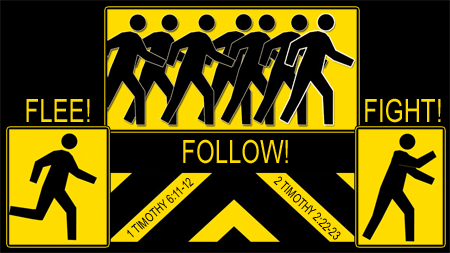
A. Covetousness (1 Timothy 6:6-11a)
B. Youthful lusts (2 Timothy 2:22a; 1 John 2:15-17)
II. Follow!
A. Righteousness (both; Matthew 6:33)
B. Godliness (1 Timothy 6:11; 2 Timothy 3:12)
C. Faith (both; Romans 10:17; Hebrews 11:6)
D. Love (both; John 14:15)
E. Patience (1 Timothy 6:11; 2 Timothy 2:24; 4:2)
F. Gentleness (1 Tim. 6:11; 2 Tim. 2:24; Galatians 6:1)
G. Peace (2 Timothy 2:22; Romans 12:18)
III. Fight!
A. “The good fight of faith” (1 Timothy 6:12; Jude 3; 1 Peter 3:15; Ephesians 4:15)
B. Yet, you do not have to attend every argument you are invited to! (2 Timothy 2:23; John 16:12)
A. This does not discourage work (1 Timothy 5:8; 2 Thessalonians 3:10)
B. We are created to work, not worry (Genesis 1:28; 2:15; 3:17-19)
II. The lilies of the field (Matthew 6:28-30)
A. More beautiful than Solomon’s glory (1 Kings 10:23)
B. Needless worry is an indicator of “little faith”
III. The kingdom of God (Matthew 6:31-34)
A. The worry of the Gentiles vs. the provision of God
B. Our priority: seeking His kingdom and His righteousness (Colossians 3:1-2; Hebrews 11:6)
C. We are not always sure what circumstances we will face from day to day. While we should be prepared, we should not be anxious.
A. “Exalted and extolled and be very high”
B. Exaltation followed severe maltreatment (Luke 23:14; John 1:1, 14; Philippians 2:7)
II. The Servant despised and rejected (53:1-3)
A. “Who has believed our report?” (John 12:37-38; Romans 10:14-17)
B. He wasn’t what they expected (Mark 6:2-4; John 1:46)
C. He can still be despised today (John 12:42-43, 49-50; Romans 8:17; Matthew 25:31-46)
III. Vicarious suffering (53:4-6)
A. Because of our sins (Isaiah 59:2)
B. Wounded or pierced (Psalm 22:16; John 19:34; Zechariah 12:10; John 19:37)
C. The folly of following human wisdom (Proverbs 3:5; Jeremiah 10:23; Judges 17:6; 21:25; Proverbs 14:12)
IV. Silence of the Servant (53:7-9)
A. Before Pilate (Matthew 27:11-14)
B. Joseph of Arimathea (Matthew 27:57-60)
C. Jesus as an example of suffering (1 Peter 2:18-25)
V. Victory and reward (53:10-12)
A. “The fruit of his suffering is the redemption of men effected by the offering for sin which Christ made when he went to the cross.” (Guy N. Woods)
B. “He shall prolong His days” – resurrection from the dead (Revelation 1:18)
A. Harsh judgment (John 8:2-5)
B. Complete tolerance (1 Corinthians 5:1-2, 6-7)
II. Comparative morality
A. “At least I never did that” (Luke 18:9-14)
B. Are we judged by our brother’s actions, or by our own? What is the standard? (2 Corinthians 5:10; John 12:48)
III. The proper view
A. With sadness (Isaiah 15:5; Romans 9:1-5)
B. With gentle attempts at restoration (Galatians 6:1)
C. With an eye to bring them to repentance (2 Corinthians 7:9-10; James 5:19-20)
I. Do you see someone involved in your life? (1 Timothy 1:12)
A. Paul saw this when he looked at Jesus
B. We should see this too! (Hebrews 2:18; Matthew 4:1-11; 1 John 2:15-16; 1 Corinthians 10:13; Hebrews 4:15-16)
II. Do you see someone willing to forgive? (1 Timothy 1:13)
A. Paul saw this when he looked at Jesus (Romans 6:6; Eph. 4:22)
B. We should see this too! (Hebrews 9:24; Mark 11:25)
III. Do you see someone full of grace? (1 Timothy 1:14)
A. Paul saw this when he looked at Jesus (Ephesians 2:4)
B. We should see this too! (Titus 2:11-14)
IV. Do you see someone trying to heal the broken of life? (1 Timothy 1:15)
A. Paul saw this when he looked at Jesus (1 Corinthians 15:9; Ephesians 3:8)
B. We should see this too! (Matthew 11:28-30)
But when they believed Philip as he preached the things concerning the kingdom of God and the name of Jesus Christ, both men and women were baptized. (Acts 8:12)









 ConcerningJesus.com