A. A blessed promise from the Father to the faithful (1 John 5:13; Titus 1:2; John 17:3; 20:30-31)
B. Assurance of our relationship with the Almighty
1. Walking in the light (1 John 1:7)
2. Obeying God’s commands (1 John 2:3-5)
3. Loving the brethren (1 John 2:9-11)
4. Believing in Christ, the Son of God in the flesh (1 John 2:22-23; 4:1-3; 5:1-5)
5. Practicing righteousness (1 John 2:29-3:10)
II. CONFIDENCE IN PRAYER
A. God hears us (1 John 5:14-15; Luke 18:10-14; Hebrews 4:16)
B. Praying for the penitent (1 John 5:16-17; 1:9)
III. CONFIDENCE IN THE RIGHTEOUSNESS OF GOD
A. Faithful Christians do not lead a life of sin (1 John 5:18-19; 3:6)
1. He who has been born of God keeps himself (1 John 5:18; Jude 1:21; Philippians 2:12; James 4:7)
2. Those who are outside Christ are under the sway of the wicked one (1 John 5:19; Ephesians 2:1-2)
B. Knowing God is to have assurance of eternal life (1 John 5:20; 1:1-3)
C. Keep yourselves from idols (1 John 5:21; Colossians 3:5)
A. Who is my brother? (1 John 4:20-5:1)
B. Does John teach “faith only”? (1 John 5:1-2; Matthew 25:31-46; James 2:14-26; Matthew 22:37-40; Romans 13:8-10)
C. “For this is the love of God, that we keep His commandments” (1 John 5:3; John 14:15,21,23,24; Romans 12:1)
II. FAITH IS THE VICTORY
A. We CAN overcome the world! We CAN be victorious! (1 John 5:4; 2:15-17; Hebrews 11:33-34)
B. Does it matter what one believes? (1 John 5:5; Romans 10:17)
III. FAITH ESTABLISHED BY THE TESTIMONY OF WITNESS
A. Three witnesses: Spirit, water, blood (1 John 5:6,8; John 16:13)
B. The witness of God is greater than the witness of man (1 John 5:9; John 5:33-36)
C. To have the Son is to have life (1 John 5:10-12)
A. Knowing God (1 John 4:7-8; Philippians 3:8-11; Titus 1:16)
B. Christ gives us life (1 John 4:9; John 14:6; 1:4; 11:25; 5:24) as the propitiation of our sins (1 John 4:10)
C. We have no excuse to not love the brethren (1 John 4:11)
II. CONFESSING GOD’S LOVE
A. The good confession (1 John 4:15; Acts 8:37-38; 1 Timothy 6:12)
B. More than mere lip service (Matthew 15:8; 7:21)
III. ABIDING IN GOD’S LOVE
A. A mutual spiritual indwelling, a reciprocal abiding, the closest fellowship and communion possible (1 John 4:12-16)
B. We can be bold by conforming our lives to His (1 John 4:17; 1 Timothy 6:11; Ephesians 5:1-2)
C. There is no fear in love (1 John 4:18; Psalm 111:10)
IV. PRACTICING GOD’S LOVE
A. Selflessly seeking the very best for another person (1 John 4:19)
B. Love for the brethren flows from a love for God (1 John 4:20)
C. You cannot love God if you do not love your Christian family (1 John 4:21)
A. Stop believing every spirit
B. Test the spirits (Acts 17:11)
C. Many false prophets (Galatians 1:6-9)
II. CONTEXT: A SPECIFIC FALSE DOCTRINE (1 JOHN 4:2-3)
A. Gnosticism stated the divine Christ did not actually inhabit a fleshly body
B. The spirit of antichrist
1. Disobedient (1 John 2:19)
2. Deniers (1 John 2:22)
3. Deceivers (1 John 2:26)
C. If a teaching does not originate with God, it must be rejected by the faithful
III. CONTRASTING JOHN’S READERS TO FALSE TEACHERS, AND FALSE TEACHERS TO TRUE APOSTLES (1 JOHN 4:4-6)
A. His readers had overcome (Jude 3; Romans 10:17)
B. The false prophets are of the world (2 Timothy 4:2-4; Matthew 7:13-14)
C. The apostles are of God (Acts 2:42; 2 John 9-11)
A. “By this we know love” (1 John 3:16; 1 Thessalonians 4:9)
B. No greater expression of love ever demonstrated (Luke 9:18-22; John 10:11, 15, 17-18; 19:10-11)
II. HIS LOVE SHOULD MOTIVATE US TO LOVE
A. We are indebted to each other (1 John 3:16; Romans 1:14)
B. Love in action (1 John 3:17; Acts 4:32-37; 2 Corinthians 8:1-4)
C. Actions speak louder than words (1 John 3:18; James 2:14-17; Matthew 25:31-46)
III. TRUE, ACTIVE BROTHERLY LOVE
A. Gives us assurance (1 John 3:19-20; 1:9)
B. Gives us confidence in prayer (1 John 3:21-22)
C. Ensures that we abide in Christ (1 John 3:23-24)
A. Taylor: “A love we don’t deserve, yet in which we may delight” (1 John 3:1; John 3:16; Romans 5:8)
B. The world does not approve of the Christian life, nor do they acknowledge God as the Almighty (1 John 3:1; John 15:18-19)
C. The promise of being like Him (1 John 3:2; 1 Corinthians 15:42-44, 51-53, 57; Philippians 3:20-21)
D. Hope – a blessed assurance, an eager perseverance (1 John 3:3; Romans 8:24-25; 1 Peter 2:21-22)
II. THE CHILD OF GOD AND SIN
A. The sin in view here is continual and habitual – not occasional weaknesses
B. Christ came to take away our sins (1 John 3:4-6)
C. The righteousness here is continual and habitual (1 John 3:7-8)
D. Love for sin is 100% incompatible with devotion to Deity
III. THE SIGNS OF RIGHTEOUSNESS
A. We are a family – we must love one another (1 John 3:10-11)
B. The unrighteous example of Cain (1 John 3:12; Genesis 4:1-8; Hebrews 11:4)
C. Lanier: “Godlessness is always upset by godliness” (1 John 3:13; 1 Peter 4:3-4)
D. Do you love your brother? (1 John 3:14-15; 1 Corinthians 13:1-7)
A. Instead of running from God, we should run to God when faced with struggles in life (1 Samuel 1:3-7)
B. The Scriptural challenge to remain faithful (1 Corinthians 16:13; Galatians 6:9; Ephesians 6:13; Hebrews 10:23; Revelation 2:10)
C. Faithfulness will not be forgotten by God (1 Corinthians 15:58)
II. BELIEF IN THE POWER OF PRAYER
A. When faced with a struggle beyond her ability to solve (1 Samuel 1:9-16)
B. Blessings from prayer (Matthew 7:7-11; 21:22; James 1:5-8)
C. According to His will (1 John 5:14-15)
III. KEEPING PROMISES TO THE LORD
A. Hannah kept her word (1 Samuel 1:11,19-28)
B. Stern warning against broken promises (Ecclesiastes 5:1-5)
C. Recognition of God’s power (1 Samuel 2:1-10)
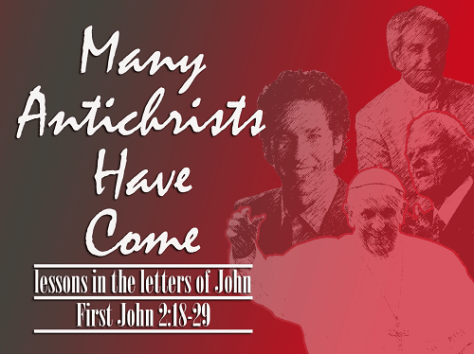
A. Who is an Antichrist? (1 John 2:18; 2 John 9-11)
B. What does an Antichrist do?
1. Disobeys (1 John 2:19)
2. Denies (1 John 2:22-23; John 5:22-23)
3. Deceives (1 John 2:26; 4:1; Acts 17:11; 20:29-30)
II. THE ANOINTED
A. Word play: anti-christoi (1 John 2:18) vs. christoi (1 John 2:20)
B. Abide in the truth (1 John 2:24; Luke 12:8-9; Acts 2:42)
C. Abide in the Son and the Father (1 John 2:24-25; Mark 10:29-30)
III. THE ASSURANCE
A. What does inspiration teach? (1 John 2:27; 2 Timothy 3:16-17)
B. Confidence at His coming (1 John 2:28; Acts 4:13)
1. Prayer of Peter and John (Acts 4:29)
2. Prayer of Paul (Ephesians 6:18-19)
C. Roy H. Lanier, Jr.: “As the father in the family is righteous, so are the children. It is a family characteristic.” (1 John 2:29; 2 Timothy 2:11-13)
A. More than just words (John 14:15; 1 John 5:3)
B. Full dedication (Matthew 6:24)
II. LOVE GOD WITH ALL YOUR SOUL
A. Barnes: “to be willing to give up the life to him, and to devote it all to his service; to live to him, and to be willing to die at his command”
B. Stephen (Acts 7:57-60)
C. James (Acts 12:1-2)
D. Smyrna (Revelation 2:10)
III. LOVE GOD WITH ALL YOUR MIND
A. Train our minds (Acts 17:11)
B. Realize the importance of God’s Word (2 Timothy 3:16-17; 2 Timothy 2:15)
C. Realize the importance of fellowship (Hebrews 10:23-25)
D. Realize the importance of obedience (Hebrews 2:3; 1 John 5:3)
IV. LOVE GOD WITH ALL YOUR STRENGTH
A. Commitment (Romans 12:1)
B. Strength comes from the Lord (Philippians 4:13)
A. What type of “love”? Agape – sacrificial love
B. What is “the world”?
1. God’s creation (John 1:10)
2. Mankind (1 John 2:2; John 3:16)
3. “The mass of unbelievers hostile to Christ and resisting salvation” (John 15:18; 1 John 3:1; 4:4-5)
C. What is your primary concern? (Romans 12:2)
D. “…or the things of the world” (Mark 10:17-22)
E. “…the love of the Father is not in him” (Matthew 6:24; Romans 8:5)
II. THE TEMPTATIONS OF THE WORLD (1 John 2:16)
A. “The three avenues of temptation”
1. The lust of the flesh — the lust of the eyes — the pride of life
2. Good for food — pleasant to the eyes — make one wise (Genesis 3:1-6)
3. Stones to bread — riches of the world — heavenly protection (Matthew 4:1-11)
B. How to avoid the lust of the flesh, the lust of the eyes, and the pride of life (Galatians 5:16-24)
III. THE FLEETING NATURE OF THIS WORLD (1 John 2:17)
A. The world is fleeting, temporary, non-permanent (2 Corinthians 4:18; 2 Peter 3:10-12)
B. “God himself is eternal; and those who abide in him, will share in his eternal nature” (Guy N. Woods)
But when they believed Philip as he preached the things concerning the kingdom of God and the name of Jesus Christ, both men and women were baptized. (Acts 8:12)






 ConcerningJesus.com