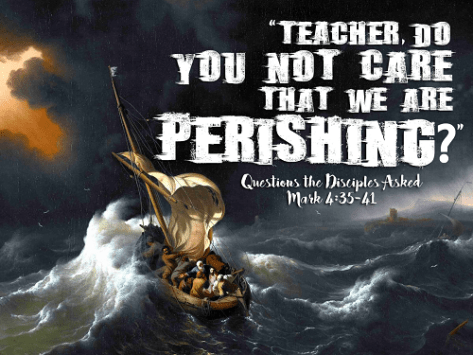
A. Literal storms
B. Figurative storms (2 Corinthians 11:24-28)
C. God DOES care!
1. Children of God are not exempt from suffering (Matthew 5:45; John 16:33; 1 Peter 4:12-13; 2 Timothy 3:10-12)
2. These afflictions serve to strengthen us (Romans 5:1-4)
II. JESUS’ QUESTIONS TO THE DISCIPLES (MARK 4:40)
A. “Why are you so fearful?” (Philippians 4:6-7; 2 Timothy 1:7; Matthew 10:28)
B. “How is it that you have no faith?” (2 Peter 1:5-11; Romans 10:17; Matthew 7:24-27; Psalm 46)
III. THE DISCIPLES’ QUESTION TO EACH OTHER (MARK 4:41)
A. He is the Creator of all (Psalm 33:6-9; Colossians 1:15-16)
B. He is the Master of all (Colossians 1:17; Matthew 28:18)
C. He is our sympathetic High Priest (Hebrews 4:15)
A. What Jesus taught (Matthew 16:16-19)
B. The disciples’ misunderstanding (Matthew 20:20-23)
C. The church is the kingdom (Mark 9:1; Acts 2; Colossians 1:13)
II. THE IMPORTANCE OF SERVICE, NOT POSITION
A. “If anyone desires to be first, he shall be last of all and servant of all” (Mark 9:35; Matthew 20:25-28; 1 Peter 5:1-3)
B. Warnings against a power-hungry attitude (Romans 12:16 vs. Colossians 3:1-2; 3 John 9-11)
C. Positive example of service (Philippians 2:5-8; John1 3:4-5,12-16)
III. BE CONVERTED AND BECOME AS LITTLE CHILDREN (MATTHEW 18:3)
A. Innocence (Matthew 5:8; 1 Timothy 4:12; 5:22)
B. Trustfulness (2 Corinthians 1:9-10; Colossians 1:11-14)
C. Lack of prejudice (Acts 10:34-35)
D. Teachableness (2 Peter 3:18)
A. The Jews refused to believe (John 6:41-42)
B. We can partake of the bread of life because of His sacrifice on the cross (John 6:48-51; Philippians 2:5-8)
C. The literal interpretation (John 6:52)
D. Complete commitment: 24/7/365 (John 6:53-58)
II. THE DISCIPLES ASK A DANGEROUS QUESTION
A. “This is a hard saying; who can understand it?” (John 6:60)
1. “Who can hear it?” (KJV)
2. “Who can listen to it?” (ESV)
3. “Who can accept it?” (NIV)
B. A discouraging question – what’s the point in even trying? (Ezekiel 33:8-9; Galatians 6:1-10; James 5:19-20)
III. THE WORDS OF JESUS CAN SAVE
A. Our responsibility to evangelize (John 6:63; Matthew 28:19-20; 2 Timothy 2:2)
B. It is not our ability, but God’s power (Romans 1:16; 1 Corinthians 3:7)
C. Consider what the Word does
1. “Build you up and give you an inheritance” (Acts 20:32)
2. We are “born again…through the word of God” (1 Peter 1:22-23)
3. “Able to save your souls” (James 1:21)
D. Is anyone too corrupt to be saved? (1 Corinthians 6:9-11)
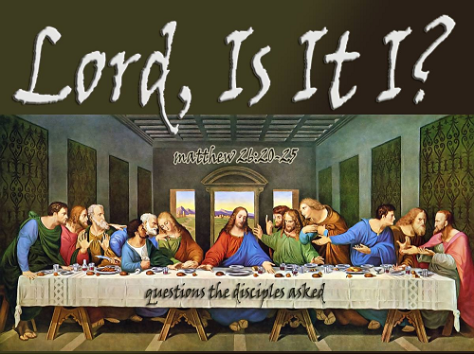
A. Jesus’ startling revelation (Matthew 26:21)
B. The fulfillment of prophecy (Psalm 41:9; cf. John 13:18)
II. THE REACTION OF THE DISCIPLES
A. The innocent eleven were “exceedingly sorrowful” (Matthew 26:22; cf. John 13:22; Luke 22:23)
1. Humble self-examination (Matthew 26:22; Mark 14:19)
2. Reaction to “this night” (Matthew 26:31, 33, 35)
B. Judas was neither innocent nor humble (Matthew 26:14-16, 25)
III. APPLICATION FOR TODAY
A. The duty of elders (Acts 20:28-30; Titus 1:10-11)
B. The preaching of sound doctrine (2 Timothy 2:3-4)
C. The obligation of the entire church (Matthew 28:19-20)
A. The Feast of the Tabernacles (Luke 9:51-52)
B. The refusal of the Samaritans (Luke 9:52-53; contrasted with John 4:39-41)
II. THE REACTION OF JAMES AND JOHN (Luke 9:54)
A. Their question shows their attitude (Luke 9:54; Proverbs 14:29; Mark 3:17)
B. Positives
1. They ask permission
2. They know their history (2 Kings 1:2-12)
C. However, they misapplied the history
1. The Samaritans were not idolatrous
2. The Samaritans still had potential (Acts 8:1,4-8,14-17)
III. THE RESPONSE OF JESUS (Luke 9:55-56)
A. The Lord’s mission (Luke 9:55-56 KJV/NKJV; John 3:16-17; Luke 19:1-10)
B. Our mission must be the same as Christ’s – whether face-to-face or on Facebook
C. When rejected, “they went to another village” (Luke 9:56)
D. Be prepared when someone comes around and is later ready to hear the truth (1 Peter 3:15)
A. “O faithless generation” (Mark 9:19; cf. Matthew 17:20)
B. True, Biblical faith is based on the Word of God (Hebrews 11:6; Romans 10:17)
C. “Lord, I believe; help my unbelief!” (Mark 9:24)
II. THE POWER OF PRAYER
A. We can, by God’s will, reach more people with God’s truth, so long as we continue to kneel before God’s throne (Romans 1:16; 1 Corinthians 3:6)
B. Do not ask God to answer a prayer that violates His Word or His character (1 John 5:14-15)
C. Exhibit humility in prayer (James 4:3,6)
III. THE HUMILITY OF FASTING
A. Old Testament examples (Ezra 8:21,23; Psalm 35:13)
B. New Testament examples (Acts 13:2-3; 2 Corinthians 6:5; 11:27)
C. Proper motivation (Matthew 6:16-18)
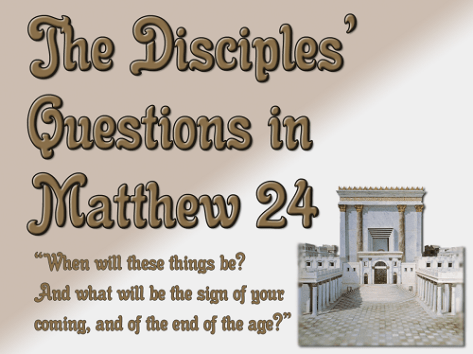
A. The temple would be destroyed (Matthew 24:2)
B. The troubled disciples ask, “When?” (Matthew 24:3)
II. “WHEN WILL THESE THINGS BE?” THE DESTRUCTION OF JERUSALEM
A. A lot of things will happen that are not signs (Matthew 24:4-14)
B. There will be a sign to flee (Matthew 24:15-28; cf. Luke 21:20)
C. The fall of the Jewish state (Matthew 24:29-31)
D. The parable of the fig tree (Matthew 24:32-35)
III. WHAT ABOUT THE END OF THE WORLD?
A. Of that day and hour – no signs or warnings (Matthew 24:36)
B. Similar to the days of Noah (Matthew 24:37-39)
C. Are you ready, or have you become distracted? (Matthew 24:40-44)
D. The faithful and wise servant (Matthew 24:45-47)
E. The evil servant (Matthew 24:48-51)
A. His confusion (John 1:46)
B. His character (John 1:47; cf. Matthew 3:8-9; Mark 7:20-23)
C. His question and Christ’s answer (John 1:48; cf. Matthew 6:3-4,6,17-18)
II. GOD KNOWS ALL HIS CHILDREN
A. In the Old Testament
1. He knows those who trust Him (Nahum 1:7)
2. “Your right hand shall hold me” (Psalm 139:1-10)
B. In the New Testament
1. God cares for His creation (Matthew 6:25-30; Hebrews 13:5-6)
2. Christ knows us; He knows what we are doing (Revelation 2:2,9,13,19; 3:8)
III. THE THINGS WE DO IN THIS LIFE MATTER — BOTH GOOD AND BAD
A. Do we really understand this? (2 Corinthians 5:10; Revelation 3:15-17)
B. There are some that God will not know
1. “You who practice lawlessness” (Matthew 7:21-23)
2. “Workers of iniquity” (Luke 13:27)
3. “The face of the LORD is against those who do evil” (1 Peter 3:12)
[This is the first in a series of lessons focusing on “Questions the Disciples Asked.”]
A. John’s opinion of him
1. “Beloved…whom I love in the truth” (3 John 1; 2 Timothy 4:11; 1 Peter 5:12; 1 Timothy 1:2; 2 Timothy 2:2)
2. Prayer for wealth and health “just as your soul prospers” (3 John 2)
B. Gaius’ faithfulness caused John’s joy (3 John 3-4; 1 Corinthians 3:6)
C. Gaius’ support of missionaries (3 John 5-8)
II. DIOTREPHES
A. A heart dominated by pride and love for power (3 John 9; Romans 12:3)
B. Prating against John with malicious words (3 John 10; Ephesians 4:29)
C. Refusing to receive traveling brethren (3 John 10)
D. Forbidding the hospitality of others to the point of disfellowship (3 John 10)
III. DEMETRIUS
A. Good testimony from all (3 John 12; Matthew 5:14-16; 1 Timothy 3:7; Proverbs 22:1)
B. Good testimony from John and his fellow workers (3 John 12)
C. Good testimony from the truth (3 John 12; Romans 12:1-2)
A. Is “the doctrine of Christ” exclusively “the doctrine about Christ”? No!
B. Is “the doctrine of Christ” all that was taught by Christ? Yes! (John 12:48)
II. WHAT DOES IT MEAN TO “TRANSGRESS”? (2 John 9)
A. “Goes on ahead” (ESV); “goes too far” (NASB); “runs ahead” (NIV); “so progressive in his thinking that he walks out on the teaching of Christ” (The Message)
B. Progressiveness is harmful to the church when it rejects, ignores, or contradicts revealed truth (Colossians 3:17; Matthew 28:19-20)
C. We need dedicated, active, soul-seeking disciples to fill this house (Romans 12:1-2; 2 John 8)
III. WE MUST BE VIGILANT AGAINST ERROR (2 John 10-11)
But when they believed Philip as he preached the things concerning the kingdom of God and the name of Jesus Christ, both men and women were baptized. (Acts 8:12)


 ConcerningJesus.com