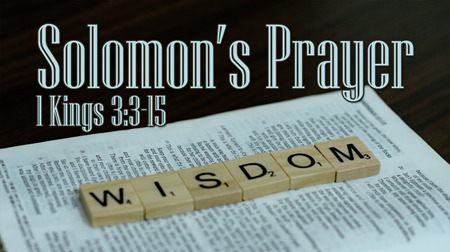
A. Solomon’s shortcomings (3:3-4)
B. Yet, God offered to provide for His people (3:5)
II. Solomon’s prayer (3:6-9)
A. A high view of God’s power (3:6)
B. Humility (3:7)
C. An awareness of obligation (3:8)
D. The request: “an understanding heart” (3:9)
III. God’s response (3:10-14)
A. God granted Solomon’s petition (3:10-12)
B. God gave more than Solomon asked (3:13-14)
IV. Solomon’s praise (3:15)
A. Burnt offerings
B. Peace offerings
C. Sharing in a feast for his servants
V. Lessons for today
A. God still offers to take care of His servants (Matthew 7:7-8)
B. A proper view of God and self (Hebrews 4:16)
C. God still answers prayers (James 1:5) and still does more than we can imagine! (Ephesians 3:20)
D. Gratitude and praise for His blessings (Ephesians 3:21)
A. The proper reception: “not as the word of men, but as it is in truth, the Word of God”
B. God’s Word produces faith (Romans 10:17), possesses the power to save (Romans 1:16; James 1:21), leads to the new birth (1 Peter 1:22-23), sanctifies the believer (John 17:17)
C. Do we treasure the Word like Paul, like the church in Thessalonica, and like the inspired poet of Israel did? (Psalm 19:7-11)
II. The example of endurance in persecution (2:14-16)
A. We should be encouraged by the perseverance of our brethren (2:14)
B. The sins of the Jews summarized (2:15-16)
C. We must continue to boldly proclaim the gospel, regardless of what the government or the culture wants
III. The eager desire for fellowship (2:17-20)
A. Paul’s care and prayer for the church (2:17; 2 Corinthians 11:28; Colossians 2:5)
B. The opposition of Satan (2:18; 1 Peter 5:8-9; James 4:7)
C. What was Paul’s hope, joy, and crown of rejoicing? What is ours? (2:19-20; Matthew 6:19-21, 33; Col. 3:1-4)
A. The rich man, who took from others even when he had enough to provide for himself
B. The poor man, who had no recourse against the rich man’s treachery
C. The ewe lamb, treasured by the poor man, taken by the rich man
II. David’s reaction (12:5-6)
A. Anger against the rich man
B. Appeal to the Law of Moses (cf. Exodus 22:1)
III. Nathan’s rebuke (12:7-12)
A. “You are the man!”
B. Despite the Lord’s blessings, David wanted more
C. The king looked at Bathsheba, lingered at the window, and lusted after her (cf. James 1:14-15; 2 Timothy 2:22)
D. There are consequences to our actions
IV. David’s response (12:13)
A. Acknowledgement of sin (cf. 1 John 1:8-10)
B. Repentance (cf. Psalm 51)
V. Lessons for us
A. No matter how good you think you are (David was a man after God’s own heart – cf. Acts 13:22), you are not immune to temptation and sin
B. No matter how bad you think you are (David was an adulterer and murderer – cf. Deuteronomy 22:22; Exodus 21:12), God’s grace can overcome your past
C. Repentance and restitution (if possible) are necessary
A. Worship is useless if you do not try to resolve personal conflict (Matthew 5:23-24; 1 John 2:9-11; 4:20-21)
B. The desire for peace (Romans 12:18)
II. When you are sinned against, and your brother does not come to you
A. Three steps (Matthew 18:15-17)
1. Go to him alone (18:15)
2. Take two or three witnesses (18:16; cf. Deut. 19:15)
3. Tell it to the church (18:17; cf. 2 Thessalonians 3:6)
B. The responsibility of the offended to forgive (Matthew 18:21-35)
III. When you observe sin in the life of another
A. Restore him with gentleness (Galatians 6:1)
B. Don’t gossip (Ephesians 4:29; James 1:26; Titus 3:2;
2 Timothy 2:16)
C. The consequence of restoration (James 5:19-20)
A. “David blessed the LORD” (29:10; cf. 29:20)
B. Why worship God? Because there is none greater! (29:11; Matthew 6:13c; 1 Timothy 1:17; Revelation 4:11)
II. Gratitude for God’s provision (1 Chronicles 29:12-13)
A. Every good thing comes from God (29:12; James 1:17)
B. Gratitude for His blessings (29:13; Romans 11:36)
C. Stewardship (Matthew 25:14-30)
III. David’s prayer for the people and Solomon (1 Chronicles 29:14-19)
A. David’s humility (29:14; Ephesians 2:10)
B. The temporary nature of our earthly existence (29:15; Hebrews 11:13-16)
C. Uprightness of heart (29:16-18; Proverbs 11:20; James 5:16)
D. David’s prayer for Solomon (29:19; Romans 12:1)
IV. An exhortation to worship (1 Chronicles 29:20)
A. Our desire to worship Him always (29:20; Acts 17:24-28)
B. The worship of the people was not limited to one day (29:21)
A. Perseverance in the face of persecution (2:1-2; cf. Acts 16)
B. Integrity of the delivery of the message (2:3)
C. With an eye to pleasing God, not man (2:4-6; cf. Colossians 3:22-25)
II. The embrace of a mother
A. Gentleness (2:7)
B. Sharing life as “dear” family members (2:8-9; cf. 1 Timothy 5:1-2)
III. The encouragement of a father
A. Paul’s behavior: devout, just, blameless (2:10; cf. 1 Peter 1:13-16)
B. Exhorting, comforting, and charging the church (2:11)
C. Don’t just talk the talk, walk the walk! (2:12; cf. Ephesians 4:1-6)
A. The time of the judges (Judges 2:16-19; 17:6; 21:25)
B. Gideon’s service as judge (Judges 8:30-31, 33)
C. Abimelech’s lust for power (Judges 9:1-6)
II. The fable of Jotham
A. The trees = the people of Shechem (Judges 9:8)
B. Rejected by the olive tree, the fig tree, and the vine (Judges 9:9-13; cf. 8:22-23)
C. In desperation the trees demand the bramble to rule (Judges 9:14-15)
III. The results
A. Jotham challenges the truth and sincerity of the people and warns of the consequences of their actions (9:16-20)
B. Abimelech had a short reign of 3 years (9:22) before the people turned on him (9:23-25)
C. Ultimately killed when trying to take the tower in Thebez (9:50-55)
IV. Lessons for us
A. Abimelech allowed his lust for power to overtake his common sense
B. The people showed poor judgment in choosing a leader
C. Whether leading or being led, look to God for guidance!
A. The desire to do what is right (Ezra 3:1-6)
B. Varying reactions to the work (Ezra 3:10-13)
C. Distractions and discouragements (Ezra 4:4-5, 12, 13)
D. A long process, but finally the temple was rebuilt (Ezra 6:14-16)
II. The restoration of the heart’s foundation
A. The preparation of the teacher (Ezra 7:10)
B. The response of the people (Nehemiah 8:1-3, 5-6)
C. Continued teaching (Nehemiah 8:8)
III. The restoration of our foundation
A. We must desire to do what is right (Titus 2:11-14)
B. We must overcome distractions and discouragement (Galatians 6:9; 2 Thessalonians 3:13)
C. We must be patient – it can be a long process! (2 Timothy 4:2; 2 Peter 3:9)
D. We must prepare ourselves (Romans 12:1-2)
E. We must respond appropriately to God’s Word (Matthew 7:24-27; John 14:15)
F. We must continue teaching (Matthew 28:18-20; Ephesians 2:19-22)
A. “More honorable than his brothers” (4:9)
B. “Called on the God of Israel” (4:10; Matthew 6:9)
C. Earnest in his petition
D. Humble in tone (cf. Luke 18:11-12)
II. The requests he made
A. An acknowledgement of his need for God (Philippians 4:6)
B. Material blessing (cf. 3 John 2)
C. Providential power (Psalm 145:15-16)
D. Divine preservation (Matthew 6:13)
III. The answer from God
A. “So God granted him what he requested” (James 4:3)
B. We can have confidence that God cares for us and listens to our petitions (Psalm 145:18; 1 John 5:14-15)
A. Understanding urgency (Acts 16:25-34)
B. Urgency is important for the lost, but equally important for the saved! (2 Corinthians 6:1-2; John 4:35)
C. We were not saved just so that we could spend an hour or two a week in the church building (Matthew 28:19-20; 2 Timothy 2:2)
II. Avoid pessimism
A. God’s strength can overcome our perceived weakness (Ephesians 3:20-21)
B. Not everyone can do everything, but everyone can do something! (1 Corinthians 12:15-22)
C. Don’t allow the negativity of fear stop you from the Lord’s work (2 Timothy 1:7)
III. Avoid indifference
A. What was the mission of Christ while He dwelt among us in the flesh? (Luke 19:10)
B. Is our mission not the very same today? (Mark 16:15-16)
C. Do we understand the eternal implications of not sharing the gospel? (Matthew 7:15-23)
IV. Avoid hypocrisy
A. Live a life worth imitating (1 Corinthians 11:1)
B. Live a life fully committed to the Lord’s cause (Matthew 6:33; 16:24)
But when they believed Philip as he preached the things concerning the kingdom of God and the name of Jesus Christ, both men and women were baptized. (Acts 8:12)








 ConcerningJesus.com