All posts by JT

Christian. Husband. Dad. Preacher. Baseball fan. Music nerd. Bookworm.

Monday through Friday with People of Faith: Day 12/260: Job

Read Job 21

Are You Listening?

For more than four decades, brother V.E. Howard used the power of radio to preach the gospel via the International Gospel Hour. He was well known for directing the listener’s attention to an important point by using this phrase, “Are you listening?”

In the twenty-first chapter of Job, the patriarch begged with his friends to listen to him without jumping to conclusions. They had run ahead of the truth and made assumptions without first examining the facts. Brother Howard wanted his listeners to avoid that habit, as did Job.

Three times before he got into his speech, Job pleaded for his friends’ attention. He said, “Listen carefully to my speech” (Job 21:2). All too often we do not actually listen to what our friends are saying, or why they are saying it. We must give careful attention to words and the motivation for those words.

Job then pleads, “Bear with me that I may speak, and after I have spoken, keep mocking” (Job 21:3). How patient are we with our friends’ struggles? Do we even let them finish telling us what is wrong? Or do we try to get to the end of the story without hearing the details, and mock (whether intentionally or not) their situation or the way they handled it? Let’s practice patience when our friends go through trials and bear with them. Isn’t this how we “fulfill the law of Christ” (Galatians 6:2)?

Finally, Job says, “Look at me and be astonished; put your hand over your mouth” (Job 21:5). If we are not willing to examine the facts of a situation, we should not comment on it. It is an insult to the person going through a trial to hear ignorant and uninformed opinions that are not based on actual facts but assumptions.

Don’t be like Job’s friends. When those close to you are going through difficult situations in this life, listen to them. Bear with them. Look at them. Avoid prejudgment and mockery. Kindly offer support and love.

“Are you listening?”

[Note: If you are not familiar with the International Gospel Hour, it is a highly recommended resource for sound gospel teaching. Brother Jeff Archey is the current host. Learn more at www.internationalgospelhour.com.]

Monday through Friday with People of Faith: Day 11/260: Job

Read Job 19:25

Confidence in the Faithfulness of God

Despite all the tragedy occurring in the life of Job, he confidently declared, “For I know that my Redeemer lives, and He shall stand at last on the earth” (Job 16:25). This was no guesswork or flimsy wish on Job’s part. He took full assurance in the fact of the existence of his Redeemer.

This is not the first time the patriarch foreshadowed the coming Redeemer. Earlier in the inspired record, Job lamented that there was not presently a go-between that could understand both God and man. “For He is not a man, as I am, that I may answer Him, and that we should go to court together. Nor is there any mediator between us, who may lay his hand on us both” (Job 9:32-33). Then, in the sixteenth chapter, Job makes reference to “my witness…in heaven” (Job 16:19) and longs “that one might plead for a man with God, as a man pleads for his neighbor!” (Job 16:21).

These are but a few prophecies in the book of Job of the Word who became flesh (John 1:14). The specific verse under consideration, Job 19:25, prophetically proclaims the fact of a Redeemer who, in Job’s very day, was alive (though He had not yet taken on human form). Job affirmed that this Redeemer would “stand at last on the earth.” He would not remain in heaven, but would take on “the form of a bondservant” (Philippians 2:7), and would become “obedient to the point of death, even the death of the cross” (Philippians 2:8). It was in these actions that Jesus became our Mediator, our Witness, our Advocate, and our Redeemer.

But how could Job have such confidence? The answer is simple: Job was a person of faith. Did he challenge God with questions? Yes. Did he bemoan his situation? Yes. Did he lose his faith in the Almighty? No!

No matter what happens to us in this life, we must never let our faith in God waver. Search for answers from Him, but do not give up on Him. Understand that the answers you want may not come. There are things that we simply do not need to know, no matter how badly we want to know. We can, however, know everything we need, “as His divine power has given to us all things that pertain to life and godliness, through the knowledge of Him who called us by glory and virtue” (2 Peter 1:3).

Have the confidence in God that Job possessed. “For I know that my Redeemer lives, and He shall stand at last on the earth.”

Using Good for the Gospel (Acts 3:1-26)

Using Good for the Gospel

Acts 3:1-26

I. God gives more than we ask for

    A. The man’s request (Acts 3:1-7)
    B. God goes above and beyond (1 Kings 3:5-14; Ephesians 3:20-21; Psalm 147:5)

II. Create an opportunity to praise God

    A. The apostles refused praise (Acts 3:8-12)
    B. Our good works should be seen and praise directed toward God (Ephesians 2:10; Galatians 6:10; Matthew 5:13-16)

III. Using those opportunities of praise, we should preach the gospel

    A. Peter points to “the God of Abraham” (Acts 3:13)
    B. Peter points to God’s “Servant Jesus” (Acts 3:13; Isaiah 53; 52:11; 42:1-4)
    C. Words of comfort and hope (Acts 3:17-19)
    D. We must teach our sincere religious neighbors the truth of the one body (Ephesians 4:4), the Savior of the body (Ephesians 5:23), how to enter that body (Galatians 3:27)

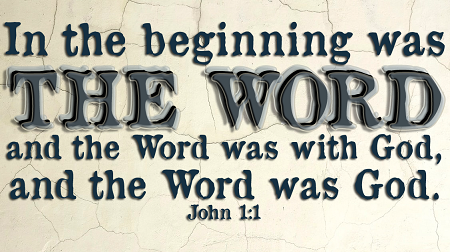
In The Beginning Was The Word…

In the Beginning was the Word

John 1:1-5, 14

I. “In the beginning…” (John 1:1)

    A. Compare with Genesis 1:1
    B. “…was the Word” (Proverbs 8:23; John 17:5; 8:53-58)
    C. He was the creative agent through whom the beginning began (John 1:3; Colossians 1:16-17)

II. “And the Word was with God” (John 1:1)

    A. Not “in” or “from,” but “with”
    B. “…and the Word was God” (Philippians 2:6; Judges 13:19-22; Joshua 5:13-15; Revelation 5:12)

III. “The Word became flesh” (John 1:14)

    A. He chose to become flesh so He could redeem mankind (Philippians 2:7; John 1:5)
    B. We must shine as lights (John 1:6-9; Matthew 5:16)
    C. Show the love of Christ (Philippians 2:8; Romans 5:6-11)

Monday through Friday with People of Faith: Day 10/260: Job

Read Job 16:1-22

The Importance of Good Friends

To whom do we turn for comfort when we are sad, upset, mad, or depressed? Which of our friends knows just the right words to pick our spirits up, or at least to keep us from falling deeper into despondency? Job needed friends like that, but instead he had Eliphaz, Bildad, Zophar, and Elihu.

Look at how Job describes his so-called friends: “Miserable comforters are you all!” (Job 16:2). He accuses them, “I also could speak as you do, if your soul were in my soul’s place. I could heap up words against you, and shake my head at you” (16:4). He says that he would be better than that, though. “But I would strengthen you with my mouth, and the comfort of my lips would relieve your grief” (16:5).

We must take seriously the words that we use with those who are closest to us, and the words they use as well. The apostle Paul writes to the church in Ephesus, “Let no corrupt word proceed out of your mouth, but what is good for necessary edification, that it may impart grace to the hearers” (Ephesians 4:29).

Do your friends act like Job’s friends? Do they accuse you of wrongdoing when bad things happen without any evidence? Certainly, we can bring hardship upon ourselves through sinful actions, but sometimes adversity comes through no fault of our own. If our friends automatically assume that we are to blame, perhaps some changes need to take place in our relationships.

Put the shoe on the other foot, too, though. Are you more like Job, or more like his friends? Are you the one who looks for fault in the face of a loved one’s disaster? Our goal must be to edify, to “impart grace to the hearers,” not to tear a person down through unfounded accusations and undue criticism.

Consider this warning from the apostle Paul: “Do not be deceived: ‘Evil company corrupts good habits’” (1 Corinthians 15:33). We must be careful to surround ourselves with people who have our eternal interests at heart, and we must strive to seek the very best for those we call friends as well.

Monday through Friday with People of Faith: Day 9/260: Job

Read: Job 1:1-2:10

“There is None Like Him on the Earth”

If God and Satan were to have a conversation about you, how would it go? Would God say the things about you that he said about this patriarch? Replace Job’s name with yours as you think about this question: “Have you considered My servant Job, that there is none like him on the earth, a blameless and upright man, one who fears God and shuns evil?” (Job 1:8).

How would Satan respond? Again, substitute your own name for Job’s: “Does Job fear God for nothing?” (Job 1:9).

Satan was accusing Job of serving God only because God blessed Job. That, according to Satan, was his whole motivation. Satan did not believe that Job feared God because of God’s power or righteousness. Rather, he only served God—according to Satan—because Job was getting something out of it.

God allowed Satan to test his theory. God allowed calamity upon calamity to come upon Job at the hand of the adversary. His servants were killed by the Sabeans. His sheep and those servants tending to them were destroyed by fire from the sky. The Chaldeans stole his camels and killed the servants riding them. His children were crushed in the collapse of the oldest brother’s house. Horrible tragedies, but Job’s resolve toward God remained the same. “The Lord gave, and the Lord has taken away; blessed be the name of the Lord” (Job 1:21).

After all of this, God told Satan, “And still he holds fast to his integrity, although you incited Me against him, to destroy him without cause” (Job 2:3). Satan again challenges God, alleging that Job only continues to serve Him because his health remains. Thus God allowed Satan to inflict bodily harm upon Job: “painful boils from the sole of his foot to the crown of his head” (Job 1:7).

His wife encouraged Job to forsake his faith, but Job responded, “Shall we indeed accept good from God, and shall we not accept adversity?” (Job 2:10). Many today are quick to turn on God and curse His church. Friends, we must stand firm against the devil’s many attacks and be rooted in the truth of God’s Word. Will life always be easy? No! But even in those difficult times, may we never, in the words of Job’s wife, “Curse God and die!” (Job 1:9).

Monday through Friday with People of Faith: Day 8/260: Noah

Read Hebrews 11:7; 1 Peter 3:18-22

Faithful Obedience

Noah believed God, and Noah’s belief motivated him to obey God. Isn’t that how true faith works? The Hebrews writer says that Noah was “moved with godly fear” because of his faith. Moved to do what? He “prepared an ark for the saving of his household.” Belief in what God had told him was not enough; Noah had to act upon the information he received from the Lord.

Remember what the last verse of Genesis 6 says? “Thus Noah did; according to all that God commanded him, so he did” (Genesis 6:22). He was not a man who subscribed to the false doctrine of “faith alone.” Rather, Noah acted upon his faith. “Thus Noah did.”

The flood and baptism have a type/antitype relationship. The flood was a foreshadowing of the command to be baptized issued by Christ, a command that we are responsible to obey today. Jesus said, “He who believes and is baptized will be saved; but he who does not believed will be condemned” (Mark 16:16). Peter answered the Jews’ question about their spiritual condition in this way: “Repent, and let every one of you be baptized in the name of Jesus Christ for the remission of sins” (Acts 2:38).

A person must obey the commands of the Lord in order to be saved by the Lord. This is not earning salvation – not by any stretch of the imagination! Rather, it is “the answer of a good conscience toward God” (1 Peter 3:21). We cannot ignore the words of Jesus Himself and expect Him to save us anyway. We must obey – by faith!

To deny that baptism has anything to do with salvation is to ignore what Jesus and His inspired apostles taught. Peter clearly states that baptism, the antitype of the floodwaters, “now saves us” (1 Peter 3:21). He taught that it was to be done “for the remission of sins” (Acts 2:38). Jesus said that one who “will be saved” is one “who believes and is baptized” (Mark 16:16). In each instance, baptism is directly linked to salvation and baptism is placed before salvation.

Noah did not live by “faith alone.” He lived a life of faithful obedience to the commands of God. Can you say the same?

Monday through Friday with People of Faith: Day 7/260: Noah

Read Genesis 9:18-29

Nobody is Perfect

Noah, the man who “found grace in the eyes of the Lord” (Genesis 6:8), “was a just man, perfect in his generations” and “walked with God” (Genesis 6:9), made a mistake. The Scriptures tell us that after the flood, “Noah began to be a farmer, and he planted a vineyard. Then he drank of the wine and was drunk, and became uncovered in his tent” (Genesis 9:20-21). This is a part of Noah’s life that we typically gloss over, but it is important to note that even those who live godly lives most of the time have moments of weakness.

There are warnings against alcohol throughout the Scriptures, many of which are found in the book of Proverbs. “Wine is a mocker, strong drink is a brawler, and whoever is led astray by it is not wise” (Proverbs 20:1).

Solomon offers an inspired treatise against alcohol in Proverbs 23:19-35. “Who has woe? Who has sorrow? Who has contentions? Who has complaints? Who has wounds without cause? Who has redness of eyes? Those who linger long at the wine, those who go in search of mixed wine” (Proverbs 23:29-30).

In the New Testament, Peter uses three words or phrases for alcohol abuse, and makes a contrast between the “lusts of men” and the “will of God” (1 Peter 4:2). He writes, “For we have spent enough of our past lifetime in doing the will of the Gentiles—when we walked in lewdness, lusts, drunkenness, revelries, drinking parties, and abominable idolatries” (1 Peter 4:3).

The apostle Paul, too, writes, “And do not be drunk with wine, in which is dissipation; but be filled with the Spirit” (Ephesians 5:18). The word “dissipation” is more easily understood in the original King James Version, where it is rendered “excess” in this verse, or “riot” in 1 Peter 4:4. It is, per Greek lexicographer Thayer, an “abandoned, dissolute life.”

Noah shows that alcohol often leads to poor judgment and often causes trouble not only in the life of the one who drinks, but in the lives of those closest to him. Thankfully, God is abundant in grace and we can be forgiven when we repent, turning away from our sin and turning to His will.

Monday through Friday with People of Faith: Day 6/260: Noah

Read Genesis 6:8-22

The Character of Noah

Genesis 6:8 makes the simple statement that “Noah found grace in the eyes of the Lord.” What made Noah different than all the others who lived on the earth at that time?

First, Moses tells us that “Noah was a just man” (Genesis 6:9). That is, he lived according to the law to which he was amenable. He did what was commanded and expected of him.

Second, Noah was “perfect in his generations” (Genesis 6:9). Not sinless; only the Son of God can lay claim to such. In relation to the world in which he lived, however, Noah stood out as relatively perfect.

Third, “Noah walked with God” (Genesis 6:9). This is the same thing that was said of the patriarch Enoch in Genesis 5:22. He was striving to please God in heaven, despite the evil world’s negative influence.

Because of the violence and corruption in the world, God made a decision to start over. Yet, He showed favor to Noah because Noah tried to do what God expected. The Lord instructed Noah to build an ark. More than that, God gave Noah specifics about the materials with which he should build, and the dimensions of the ark. God even told Noah to make preparations for food for himself, his family, and the animals. God left nothing to Noah’s imagination; He told Noah what was expected.

Genesis 6:22 says, “Thus Noah did; according to all that God commanded him, so he did.” But what if he didn’t?

What if Noah had decided that oak would have been prettier than gopherwood? What if Noah had decided that fifty cubits would not be wide enough to house all the animals, and he decided to make it sixty cubits instead? What if Noah had invited his very good friends to join him and his family on the ark?

Friends, we need to follow God’s instructions to the very best of our ability. If we knowingly disobey Him, we cannot expect to find grace in His sight. “According to all God commanded him, so he did.” Have you done all that God has commanded of you in this Christian age?

The Gift of the Holy Spirit (Acts 2:38)

The Gift of the Holy Spirit Acts 2:38

Acts 2:38

I. Voices of the past

    A. Non-miraculous indwelling? (Coffman, McGarvey, Jackson)
    B. Miraculous gifts of first century? (Boles, Camp, Woods)

II. Context

    A. Joel’s prophecy of the miraculous (Joel 2:28-32)
    B. Pentecost as the fulfillment of that prophecy (Acts 2)

III. “Receive”

    A. Samaria (Acts 8:14-17)
    B. Cornelius (Acts 10:44-47)
    C. Ephesus (Acts 19:1-6)

IV. “Gift”

    A. Samaria (Acts 8:18-20)
    B. Cornelius (Acts 10:45; 11:15-17)

V. Parallel with Mark 16:16-18

    A. Salvation and its divine conditions (Mark 16:16; Acts 2:38a)
    B. The gift of the Holy Spirit (Mark 16:17-18; Acts 2:38b)