Tag Archives: Luke 12

Be Watchful, Be Prepared (Luke 12:35-48)

Be Watchful, Be Prepared (Luke 12:35-48)

(Luke 12:35-48)

I. The importance of watchfulness

    A. What you want (Genesis 2:16-17; 3:1-6)
    B. Where you reside (Genesis 13:711; 19:31-38)
    C. What you do (1 Kings 4:29-30 11:1-9)
    D. What you think (Isaiah 5:20; 30:9-11)

II. Parables of watchfulness (Luke 12:35-40)

    A. Watching for the master to return (Luke 12:35-38)
    B. Watching for the thief (Luke 12:39)
    C. The application: watch for the Lord (Luke 12:40)

III. A parable of preparedness (Luke 12:42-48)

    A. The wise steward will be blessed in doing the will of his master (12:42-44)
    B. The wicked steward will take advantage of his master’s absence, be wasteful with his provisions and cruel to other servants, leading others astray (12:45-48)

IV. Apostolic instructions

    A. Be vigilant (1 Peter 5:8)
    B. Be prepared (Ephesians 6:15)
    C. Why? (Romans 14:12)

“I’m Gonna Need a Bigger Barn!” (Luke 12:13-21)

I'm Gonna Need a Bigger Barn! (Luke 12:13-21)

(Luke 12:13-21)

I. A family dispute over inheritance (Luke 12:13-15)

    A. The man’s demand – not a request! (12:13)
    B. Jesus’ concern was not for the physical (12:14)
    C. Neither should our concern be primary for the physical! (12:15; Ecclesiastes 5:10)

II. The farmer’s fortune (Luke 12:16-19)

    A. The rich get richer (12:16)
    B. The farmer’s focus on self (12:17-19)
    C. His thoughts resulted in self-centered actions (12:18)
    D. Your soul’s satisfaction cannot be purchased (12:19)

III. God’s warning (Luke 12:20-21)

    A. “Fool” (12:20)
    B. “Then what?” (12:20)
    C. This man’s greed resulted in his condemnation (12:21; Ecclesiastes 5:13)

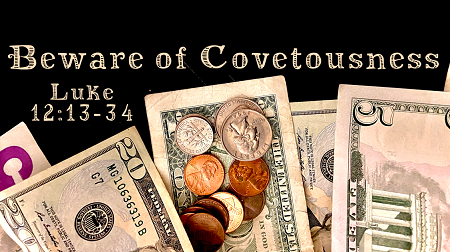
Beware of Covetousness (Luke 12:13-34)

Beware of Covetousness Luke 12:13-34

Luke 12:13-34

I. The rich fool thought only of himself

    A. Selfishness shown in “aggressive pronouns” (Luke 12:16-19)
    B. Opportunities to share (Acts 2:44-45; 5:1-4; 2 Cor. 8:1-5, 12)

II. The rich fool thought only of this life

    A. Success measured by materialistic standards (Luke 12:19)
    B. “But God said…” (Luke 12:20; James 4:13-17; Galatians 6:10)
    C. Are we more concerned with the temporary or the eternal? (Luke 12:21; 12:4-5)

III. God cares for us

    A. We are valuable to Him (Luke 12:6-7; John 3:16-17; 1 Timothy 2:4; 2 Peter 3:9)
    B. Warning against anxiety (Luke 12:22-34; 2 Thessalonians 3:10; Colossians 3:1-3)

Read the New Testament in a year, one chapter a day, five days a week

Day 12/260: Read Luke 12

How many warnings can be found in the New Testament about the dangers of covetousness? To covet is to want a thing so badly that you are consumed by that desire.

The apostle Paul exhorted the church at Colosse to “put to death your members which are on the earth: fornication, uncleanness, passion, evil desire, and covetousness, which is idolatry” (Colossians 3:5). When we elevate something to a place of inordinate desire and make it more important than God, that becomes our idol. It may be something expensive like our car or our house, or it could be something relatively inexpensive like a particular brand of clothing, cell phone, or collectible. The object itself is not necessarily sinful, but the act of coveting the thing is sin.

Jesus says that “one’s life does not consist in the abundance of the things he possesses.” You may have seen the bumper sticker, “The one with the most toys wins.” Sadly, there are many Christians who live that bumper sticker rather than the words of our Lord.

Where are your priorities? Are you being a good steward with God’s blessings?

Memory (Copy into a notebook 5-10 times)

Luke 12:15, And He said to them, “Take heed and beware of covetousness, for one’s life does not consist in the abundance of the things he possesses.”

Pray

Pray for the strength to resist covetousness in this overly materialistic world, recognizing that God’s blessings should be used for His glory rather than feeding our appetites.