(outline based on L.O. Sanderson’s hymn of the same name)
I. Verse 1
A. He left heaven and came to earth (Philippians 2:5-7)
B. He did this knowing He would be rejected (John 1:5, 10-11)
II. Verse 2
A. He faced temptation (Hebrews 4:15)
B. He spent much time teaching (Matthew 7:28-29) and praying (Luke 5:16)
III. Verse 3
A. He faced intense emotional strain, followed by physical pain (Luke 22:41-44; Matthew 27:21-31)
B. He suffered death upon the cross (Philippians 2:8; Romans 5:8)
A. Listened to truth but never applied it (James 1:22-25)
B. Enticed by lust (James 1:13-15)
C. Did not think before he spoke (Proverbs 29:20)
D. Allowed peer pressure to control him (1 Corinthians 15:33; Ephesians 5:11; Exodus 23:2)
II. Herodias
A. Vindictive (Romans 12:17-21)
B. She used people—even her own daughter!—to get her way (1 Corinthians 13:5)
III. John the Baptizer
A. A just and holy man (Luke 1:6; Leviticus 11:44-45; 19:2; 20:7, 26; 21:8)
B. Refused to compromise truth even in the face of death (1 Corinthians 15:58; Matthew 10:22)
A. There is no sin too great for God to forgive – Christ’s blood makes us whole! (Ephesians 1:7)
B. He will be our guide and provide light in this world of darkness (John 1:4-5)
II. Verse 2
A. The joy of His mercy and love should cause us to sing with joy (James 5:13)
B. His magnificent blessings should motivate us to avoid evil, to cling to Him, and to remain loyal throughout life (James 1:17, 21-22, 25)
III. Verse 3
A. God still speaks! (John 12:48; 2 Timothy 3:16-17)
B. What hinders us from full obedience and genuine discipleship? (Luke 9:23-26; Mark 12:30)
C. Trust in His power to save (1 Peter 1:3-5)
A. Because He was known to them, “His own country” was astonished by Him, resulting in a judgmental attitude (James 2:1-7)
B. Because He was known to them, “His own country” was offended at Him, resulting in jealousy, selfish ambition, envy (1 Corinthians 12:4-11)
II. Their gossip hindered their faith (6:4-6)
A. Jesus received no honor from “His own country” (Mark 2:6-7, 16; 3:23, 24, 6)
B. Jesus was prevented from performing miracles because of their unbelief
C. The lack of faith in “His own country” made Jesus marvel (cf. Matthew 8:5-10)
III. The apostles sent out (6:7-13)
A. They were not to worry about physical needs but depend on others for support (1 Corinthians 9:14)
B. When rejected, they were to “shake off the dust under your feet” (Acts 13:42-46, 51; Matthew 7:6)
C. They delivered a message of repentance (Mark 1:4, 15; 2:17)
A. The glory due to His name (Isaiah 6:3; Revelation 4:8, 11; 5:9-10, 12, 13)
B. Worship in the beauty of holiness (John 4:24; 1 Peter 3:3-6; 1 Tim. 2:8-10)
II. The power of the LORD (29:3-9)
A. “The voice of the LORD is powerful;
The voice of the LORD is full of majesty”
B. Powerful in creation (Genesis 1:3, 6, 9, 11, 14, 20, 24, 26)
C. Powerful in commandments (Exodus 19:18-19; 20:1-18)
D. Powerful in conversion (Romans 10:17; Mark 16:15-16; Romans 1:16; 2 Timothy 3:16-17)
III. The peace of the LORD (29:10-11)
A. The voice of the Lord, like the Flood, both destroys and saves
B. “The King forever” (1 Timothy 1:17)
C. He gives His people strength (1 Peter 5:10)
D. He gives His people peace (Philippians 4:6-7)
A. Jairus – a ruler of the synagogue and a father to a little girl
B. Approached Jesus directly for help
II. Overwhelmed with concern for self (5:25-34)
A. An unnamed woman – a societal outcast because of her disease (Leviticus 15:25-30)
B. Snuck up behind Jesus for healing – touched Him, made Him ceremonially unclean
III. Overwhelmed with grief (5:35-40)
A. “Do not be afraid, only believe”
B. “A tumult…wept and wailed loudly;” Jesus calls it a “commotion”
C. Jesus provides assurance, permits only the girl’s parents and Peter, James, and John to remain inside
IV. Overwhelmed with amazement (5:41-43)
A. Jairus’s daughter was raised from the dead
B. Jesus touched her – again, making Himself ceremonially unclean (Numbers 19:11-13)
A. The Spirit of God dwells in the church (Ephesians 2:19-22; 5:18; Colossians 3:16)
B. The temple of God—the church of Christ—is holy (1 Peter 1:13-16)
II. Warning against defiling God’s temple
A. “Defile” and “destroy” from the same Greek word: phtheirō
B. Modern-day defilement of God’s temple, the church
1. Division (1 Corinthians 1:10)
2. False teaching (1 Timothy 4:1-2; 2 Peter 2:1-3; 1 John 4:1; 2 John 9-11)
3. Leaving “first love” (Revelation 2:4-5)
4. Apathy (Revelation 3:15-16; 2 Timothy 2:15; Romans 12:11)
C. God will destroy those who…
1. Engage in destructive behaviors (Romans 11:22; Matthew 13:40-42)
2. Refuse to work for Him (Matthew 25:29-30)
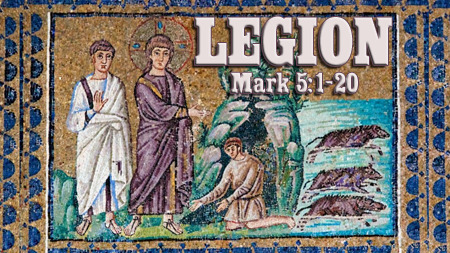
I. The incredible authority over the demons (5:1-13)
A. The power of the demons (5:1-5)
B. The power of Jesus over the demons (5:6-9)
C. The plea of the demons (5:10-12)
D. The destruction of the demons (5:13)
II. The illogical answer of the townspeople (5:14-17)
A. Fear (5:14-15)
B. “Please leave” (5:16-17)…and He did! (5:18a)
1. Jesus did not beg or plead or perform additional signs; they rejected Him and He left
2. “God gave them up” (Romans 1:18, 24-32)
III. The individual assignment to the believer (5:18-20)
A. The plea of the former demoniac (5:18)
B. The instruction of Jesus (5:19)
C. The astounding proclamation (5:20)
A. Speak the commands of God (4:6-9; Titus 2:3-5)
B. Speak words of positivity despite obstacles (4:14; 1 Timothy 3:11)
C. Speak words of wisdom that others desire to hear (4:5; 1 Timothy 5:11-13)
II. Use your influence for the Lord
A. Earn respect and devotion (4:4-5; 1 Timothy 2:9-10)
B. Comforting impact (5:7; 1 Peter 3:1-6)
C. Strengthening force (4:24; Acts 9:36-41)
D. Influence affects change
1. The safety of the roads (5:6; 5:10-11)
2. The civility at the gates (5:8; 5:11)
3. Peace for 40 years! (5:31; Matthew 5:9; Philippians 4:2)
III. Use your station in life for the Lord
A. Prophetess (4:4; Exodus 15:20; 2 Kings 22:14-20)
B. Wife (4:4; Proverbs 31)
C. Judge (4:4; the only woman to wear this title in Israel)
A. Jesus slept (Mark 4:35-38)
B. Jesus experienced the human condition
1. He was weary (John 4:6)
2. He was hungry (Matthew 4:2)
3. He was sad (John 11:33-35; Luke 19:41-44)
4. He was mad (Mark 3:5)
5. He was compassionate toward physical needs (Matthew 14:14) and spiritual needs (Matthew 9:36-38)
II. The divinity of Jesus
A. Demonstrated by His power over nature (Mark 4:39, 41)
B. Demonstrated by His power over disease (Mark 1:32-34a)
C. Demonstrated by His power over evil (Mark 1:34b)
D. Demonstrated by His power over death (Mark 5:35-43; Luke 7:11-15; John 11:41-44; Acts 2:22-24)
III. The anxiety of the disciples
A. With the Master in their presence, no need to fear (Mark 4:37-41; 2 Timothy 1:7)
B. Warnings against a lack of faith (Matthew 6:25-33; 14:22-31; 16:5-12)
But when they believed Philip as he preached the things concerning the kingdom of God and the name of Jesus Christ, both men and women were baptized. (Acts 8:12)









 ConcerningJesus.com