A. Acquisition of the linen sash (13:1-5)
B. Retrieval of the linen sash (13:6-7)
II. The application (13:8-11)
A. The result of pride: ruination (13:8-9)
B. The result of rebellion: unprofitable (13:10)
C. The aim of God was to exalt the nation, but Israel chose to reject Him (13:11)
III. Lessons for today
A. There is still danger in pride (Jeremiah 10:23; Proverbs 16:18)
B. Disobedience is detrimental (Jeremiah 7:24; 8:5; 11:8)
C. God desires to exalt His people – don’t hinder His purposes through your pride and rebellion! (Deuteronomy 26:17-19; James 4:10)
I. The hope of resurrection is not a return to this life…
A. Though God demonstrated this power on several occasions (1 Kings 17:17-24; 2 Kings 4:18-20, 32-37; John 11:43-44; Acts 9:36-42)
B. Rather, it is the hope of a return to God (Ecclesiastes 12:6-7; Acts 24:15)
II. The depth of the hope of the resurrection
A. Rooted in the resurrection of Jesus (1 Corinthians 15:20)
B. Looks forward to redemption (Job 19:25-27)
C. Embraces immortality (1 Corinthians 15:51-55)
III. The results of the resurrection
A. The prophecy of Daniel (12:2-3), affirmed by Jesus (John 5:28-29)
B. “Some to everlasting life” (Matthew 25:21, 23, 34)
C. “Some to shame and everlasting contempt” (Matthew 25:30, 41, 46)
I. The condition of man and conception of God (1:4-5)
A. “Wept, and mourned…fasting and praying” (1:4; cf. Romans 9:2)
B. “LORD God of heaven” (1:5)
II. Persistence (1:6)
A. Appeal for God’s attention (cf. Isaiah 59:1-2; 1 Peter 3:12)
B. “Day and night” (cf. 1 Thessalonians 5:17; Nehemiah 2:1)
III. Contrition of heart (1:6-7)
A. Nehemiah prayed for Israel and confessed their sin
B. Nehemiah acknowledged his own failings (cf. Isaiah 6:5; 1 John 1:8)
IV. God’s character (1:8-10)
A. God’s promise – “If you are unfaithful, I will scatter…if you return, I will gather” (1:8-9)
B. God’s possession – “Your servants…Your people” (1:10)
C. God’s pattern – “whom You have redeemed” (1:10)
V. God’s providential work (1:11)
A. Asked for “mercy in the sight of” Artaxerxes the king
B. We should pray that the government acts in such a way that opens doors for the people of God (cf. 1 Tim. 2:1-4)
A. To pass on the miraculous gift of the Holy Spirit (Acts 8:14-20; 19:1-6)
B. Paul desired to do this for the church at Rome (Romans 1:11)
C. Paul did this for Timothy (2 Timothy 1:6; 1 Timothy 4:14)
II. Laying on of hands for healing (miraculous)
A. Ananias laid hands on Saul so he might receive his sight (Acts 9:12, 17-18)
B. Paul laid hands on the father of Publius, suffering from fever and dysentery (Acts 28:8)
C. The apostles have all died, thus the ability to pass on the ability to perform miracles has ceased, thus miracles have ceased (1 Corinthians 13:8-10)
III. Laying on of hands as an act of sanctioning or ordaining (non-miraculous)
A. The elders laid hands on Timothy (1 Timothy 4:14)
B. The apostles laid hands on the seven servants (Acts 6:6)
C. The church at Antioch laid hands on Barnabas and Saul (Acts 13:1-3)
D. Should be done with great care and wisdom (1 Tim. 5:22)
A. The metaphor of sleep (4:13; cf. John 11:11; Acts 7:60)
B. Sorrow is not prohibited, but sorrow without hope (4:13; cf. Acts 8:2; John 11:35; Philippians 2:25-27)
C. Just as Jesus died and was raised, so those who died in Him will be raised (4:14)
II. The Second Advent (4:15-17)
A. In this passage, Paul deals exclusively with the faithful; other Scriptures deals with the disobedient (John 5:28-29; 2 Thessalonians 1:7-9)
B. The living saint will not precede the sleeping saint at His coming (4:15)
C. When the Lord descends, the dead in Christ will rise (4:16)
D. Then those who are still alive, along with those who had died, will meet the Lord in the air (4:17)
E. “Thus we shall always be with the Lord” (4:17; cf. 1 Corinthians 15:24)
III. Comfort one another (4:18)
A. Death is not the end of one’s existence, but a time of rest from our labors (cf. Revelation 14:13)
B. The Lord will not abandon the faithful, whether living or dead – those “asleep in Christ” will not miss out on the Second Advent!
C. We will be reunited with our departed loved ones in Christ – “together with them in the clouds”
D. It is not the where but the with whom that is important – “we shall always be with the Lord”
A. Daniel was a man of principle (Daniel 1:8; 6:3-4; 9:3)
B. Daniel devoted time to God (cf. Romans 12:12; Colossians 4:2; Luke 18:1)
C. Daniel thanked God in prayer (cf. 1 Thessalonians 5:16-18; Philippians 4:6)
D. Daniel refused to compromise
II. The faithfulness of God (Daniel 9:4)
A. Great (cf. Job 5:9; 37:5)
B. Awesome (“dreadful” KJV) (cf. Genesis 3:10; Ecclesiastes 12:13)
C. Keeps His covenant and mercy with those who love Him and keep His commandments (Psalm 103:17-18; John 14:15; 1 John 5:3)
III. The spiritual condition of the people (Daniel 9:5-15)
A. Sin is lawlessness (1 John 3:4)
B. Failure to heed the warnings of God’s spokesmen (cf. 2 Chronicles 36:15-21)
C. The contrast between man and God
D. Consequences of disobedience known since deliverance from Egypt (Leviticus 26:14-39; Deuteronomy 28:15-68)
IV. The plea for mercy (Daniel 9:16-19)
A. Turn away Your anger and fury
B. Cause Your face to shine on Your people
C. Not because we are righteous (we are not!) but because You are righteous
D. Hear, forgive, listen, and act
A. Philadelphia – familial love between brothers (Romans 12:10)
B. Agapeo – sacrificial love (John 3:16)
C. “Increase more and more” – never stop loving each other, and never stop abounding in love! (cf. 1 Thessalonians 3:12; 4:1)
II. The Christian’s ambition (4:11-12)
A. Lead a quiet life
1. Spread the news of Jesus (Mark 1:28; 16:15)
2. Do not seek glory for self (James 4:10; Matthew 6:1-7, 16-18)
B. Mind your own business (1 Timothy 5:13; 1 Peter 4:15; Philippians 4:8)
C. Work with your own hands (1 Timothy 5:8; Ephesians 4:28; 2 Thessalonians 3:10)
A. Israel’s King Ahab (1 Kings 16:29-30; 21:25-26)
B. Victory over Syria (1 Kings 20:21)
C. Blasphemy of the Syrians (1 Kings 20:23-25)
D. The Lord’s response (1 Kings 20:28)
E. Another victory over Syria (1 Kings 20:29-30)
F. King Ahab’s failure to obey (1 Kings 20:31-34)
II. The parable
A. The prophet’s disguise (1 Kings 20:35-38)
B. The scenario presented (1 Kings 20:39-40)
C. The king’s sin exposed (1 Kings 20:41-43)
III. Lessons for today
A. Sometimes God’s commands are difficult to obey – but why? (1 Corinthians 6:9-10; 5:4-5, 11, 13; 1 John 5:3)
B. Priorities matter! (Colossians 3:1-4)
C. Complete obedience is necessary (Romans 12:1-2)
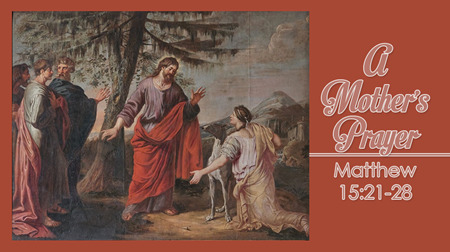
A. Empathy and love
B. The privilege of intercession (1 Timothy 2:1-4)
C. Jesus’ ultimate intercession for us (Isaiah 53:12; Romans 8:34; Hebrews 7:25)
II. A specific petition (Matthew 15:22b)
A. Whether suffering, sick, or ensnared in sin—be specific! (James 5:13-16)
B. He cares! (1 Peter 5:6-7)
III. A persistent petition (Matthew 15:23-24)
A. Despite the silence of the Savior
B. Despite the annoyance of the apostles
C. Despite the apparent hesitance to help
IV. A reverential petition (Matthew 15:25)
A. She worshiped Him as Lord
B. Still today, He is worthy of worship and He is involved in our prayers (1 Timothy 2:5; Hebrews 4:14-16)
V. A humble petition (Matthew 15:26-28)
A. She recognized His authority and power
B. “Great is your faith!”
A. At 17 – sold into slavery by his own brothers (Gen 37)
B. Due to his integrity, was trusted by Potiphar (Gen 39:1-6)
C. He not only resisted, he fled from temptation (Gen 39:7-12)
D. Despite slanderous accusations, Joseph trusted God and God blessed Joseph (Gen 39:21-23)
E. Despite the forgetfulness of others, Joseph trusted God and God blessed Joseph (Gen 40ff)
F. Even when exalted to a lofty position—in Potiphar’s house, among the prisoners, and in all the land—Joseph trusted God and God blessed Joseph
G. When you are tempted, remember Joseph who ran from sin
II. Run to God like Josiah
A. At only 8 – Josiah was made king after the death of his father Amon, who “did evil in the sight of the LORD” (2 Chr 33:22), but Josiah wanted to do the right thing (34:1-2)
B. At 16 – he sought God (2 Chronicles 34:3)
C. At 20 – he fought against idolatry (2 Chronicles 34:4-7)
D. At 26 – he was introduced to the written Law when the scroll was discovered in the temple, and Josiah mourned the condition of the people (2 Chronicles 34:8, 14, 19)
E. Josiah committed himself and his kingdom to obedience (2 Chronicles 34:31, 33)
F. When you see shortcomings in your life, remember Josiah and run to God
III. The responsibility of the older generation
A. Parents – teach by word and example (2 Timothy 1:3-5; 3:14-15)
B. Men – teach those who are younger how a Christian man should act (Titus 2:6-8) – train them for future service (deacons, preachers, elders)
C. Women – teach younger ladies how a Christian woman behaves (Titus 2:3-5) – train them for future service (teachers, wives of deacons, preachers, elders)
1 Timothy 4:12, Let no one despise your youth, but be an example to the believers in word, in conduct, in love, in spirit, in faith, in purity.
But when they believed Philip as he preached the things concerning the kingdom of God and the name of Jesus Christ, both men and women were baptized. (Acts 8:12)




 ConcerningJesus.com